




Posted on 23.10.2026
MedTech Europe, ABHI and BIVDA welcome the indefinite recognition of CE-marked medical devices and IVDs in Great Britain
London and Brussels, 23 October 2026 – MedTech Europe, the Association of British HealthTech Industries (ABHI) and the British In Vitro Diagnostics Association (BIVDA) welcome the UK Government’s decision, announced by the Medicines and Healthcare products Regulatory Agency (MHRA), to indefinitely recognise CE-marked medical devices and in vitro diagnostic medical devices (IVDs) in Great Britain. Indefinite recognition of CE-marked devices is a foundational step in UK regulatory reform towards ensuring continued patient access to essential medical technologies (including IVDs, digital healthcare and AI), providing greater regulatory predictability for manufacturers and supporting the competitiveness of the medical technology sector in both the UK and the EU. The decision is also significant given the highly integrated nature of the EU–UK medical technology relationship. Our industries depend on interconnected supply chains, cross-border trade and close regulatory cooperation. Avoiding unnecessary regulatory divergence is essential to ensuring that medical technologies continue to reach patients and healthcare systems without disruption. The continued recognition of devices compliant with the EU Medical Device Regulation (MDR) and In Vitro Diagnostic Medical Devices Regulation (IVDR) represents a pragmatic and proportionate approach. It maintains high standards of patient safety and device performance while avoiding unnecessary duplication of regulatory processes for products already assessed under the EU regulatory framework. At a time when the medical technology sector is navigating an increasingly complex regulatory environment, this decision demonstrates the value of regulatory approaches that maintain high standards of safety and performance while facilitating market access and supporting innovation and investment. MedTech Europe, ABHI and BIVDA appreciate the MHRA’s constructive engagement with industry throughout the consultation process and welcome this outcome. We look forward to continuing our constructive dialogue with the MHRA to support and monitor the effective implementation of this decision, including clear guidance for manufacturers. Continued regulatory cooperation between the UK and the EU will remain essential to ensuring patients, public and healthcare professionals have a more resilient supply of safe and effective medical technologies.
Posted on 15.10.2026
Towards a single regulatory pathway for AI-enabled medical technologies
MedTech Europe, alongside EFPIA,COCIR, DIGITALEUROPE, ESTRO, and EUCOPE, the organisations representing healthcare professionals, researchers, innovators and industry across Europe, recognise the growing role that artificial intelligence (AI) can play in improving patient care and supporting the sustainability of healthcare systems. As Europe faces ageing populations, growing workforce shortages and rising healthcare demand, AI-enabled medical devices and diagnostics can help support earlier diagnosis, more personalised treatment, improved clinical decision-making and more efficient care delivery. When appropriately designed, clinically validated, including by involving clinicians in their development, and responsibly deployed, AI can provide valuable support to patients and healthcare professionals across screening, medical imaging, laboratory medicine and patient monitoring[1] by identifying clinically relevant patterns, improving workflows and supporting more timely and informed clinical decisions. AI-enabled medical technologies should function reliably and be user-friendly in clinical work environments, so that they support rather than hamper clinical workflows. Realising these benefits, however, requires public and professional trust and a regulatory framework that is both safe and workable, enabling timely access to innovative healthcare technologies. Recent experience with the implementation of the Medical Devices Regulation (MDR) and In Vitro Diagnostic Medical Devices Regulation (IVDR) demonstrates the consequences of regulatory complexity. While the Regulations have introduced a stronger regulatory framework, including enhanced safety, clinical evidence, lifecycle oversight and transparency, certification timelines have doubled, increasing from 9–12 months to 12–24 months, while predictability of regulatory processes has been reduced, contributing to delays in patient access, product withdrawals and shortages. Today, more than 60% of healthcare professionals report medical device shortages, while a similar proportion of hospital pharmacists indicate that shortages have delayed patient care[2] [3]. The current revision of the MDR/IVDR provides a critical opportunity to avoid creating two parallel product-regulatory systems with overlapping and divergent requirements for AI-enabled medical devices and diagnostics. Medical devices and diagnostics represent a highly regulated sector where AI-related risks must be assessed alongside clinical benefits, safety and performance throughout the product lifecycle. A tailored sector-specific framework, provided by the MDR/IVDR, is therefore the most suitable to ensure that AI-enabled medical technologies can be assessed in their full clinical context, rather than treating AI as an isolated and separate component of a product. In its proposal for the revision of the MDR/IVDR, the European Commission proposed to provide one single clear framework for AI-enabled medical devices (by moving MDR and IVDR from Section A to Section B of Annex I of the AI Act and providing means for applying AI-relevant requirements through MDR/IVDR). This reflects the fact that medical devices and diagnostics are already subject to comprehensive sector-specific legislation requiring manufacturers to continuously demonstrate and maintain, safety, performance, clinical and performance evaluation, risk management, vigilance and post-market surveillance and lifecycle oversight. The Commission’s proposal also recognises that highly regulated sectors may require tailored approach. Medical devices and diagnostics represent precisely such a sector. Integrating the relevant AI Act requirements, such as transparency, data governance and human oversight into the MDR and IVDR would ensure that these technologies continue to be assessed through one coherent regulatory pathway while maintaining the objectives and requirements of the AI Act, including high standards for patient safety, AI governance, equity and appropriate human and clinical oversight. This approach would allow the safety and performance of an AI-enabled medical technology to be assessed as a whole and in its full clinical context, rather than separating the assessment of its AI component from that of the medical device or diagnostic of which it forms an integral part. It would also allow post-market safety signals and incidents affecting patient safety to be addressed through a unified system of vigilance and market surveillance fundamental for faster and appropriate action. In doing so, it would preserve the safeguards and requirements applicable to high-risk AI systems while avoiding duplicative regulatory processes and providing greater legal certainty for all stakeholders. It would also accelerate patient access to innovative devices, reinforce Europe’s competitiveness, and make the EU a more attractive environment for development and deployment of innovative, regulated AI-enabled medical technologies that improve patient outcomes. To make this framework comprehensive and operational, the revised MDR and IVDR should require the European Commission to adopt without undue delay, the necessary measures reflecting the relevant high-risk AI requirements in the General Safety and Performance Requirements of the MDR and IVDR. These measures should be developed transparently and in consultation with patients, healthcare professionals, including clinicians, scientific experts and other relevant stakeholders. We therefore call on the European Parliament and the Council to preserve the Commission’s proposal of moving the MDR and IVDR from Section A to Section B of Annex I of the AI Act and reflecting relevant AI-Act high-risk requirements into the MDR/IVDR in a time-bound process. Europe’s ambition should be clear: to create a regulatory framework that protects patients, supports healthcare professionals, enables research and innovation, and ensures that Europeans can benefit from the safe and timely deployment of AI-enabled healthcare technologies. Download the joint statement below. [1] European Commission: Directorate-General for Health and Food Safety, PwC, EEIG and Open Evidence, [Directorate-General for Health and Food Safety, PwC, EEIG, Open Evidence], Study on the deployment of AI in healthcare – Final report, Publications Office of the European Union, 2025, https://data.europa.eu/doi/10.2875/2169577 [2] https://www.medtecheurope.org/wp-content/uploads/2025/03/250318_mte-report-on-admin-burden-ivdr_mdr_final.pdf?utm_source=chatgpt.com [3] https://eahp.eu/policy-hub/medical-device-regulation/
Posted on 06.10.2026
MedTech Europe’s Facts & Figures 2026
Download the full Facts & Figures 2026 report here The data in this Facts & Figures 2026 edition tells a story of resilience in the face of adversity. Europe’s medtech sector is innovating and hiring at record levels: employment has passed 950,000, patent filings remain at record highs, and our innovation efficiency continues to outperform every comparable sector. Yet Europe’s global position is narrowing. Spending on medical technology here grew just 1.8% in 2025, against a decade average of around 5.6% and below faster-moving markets. Europe now holds 25.6% of the world medtech market, down from 26.4% a year earlier and close to 29% in 2015. The constraint isn’t our capacity to invent, it’s Europe’s shrinking share of places where innovation is adopted, reimbursed and scaled. The sector’s strength isn’t in question; whether Europe still rewards it is. Much of the answer lies in a regulatory system that hasn’t kept pace. The revision of the Medical Devices Regulation (MDR) and In Vitro Diagnostic Medical Devices Regulation (IVDR), under negotiation as this report went to press, is the clearest opportunity in a decade to restore speed and predictability without loosening patient safeguards. AI makes this urgent. AI-enabled diagnostics already used in European hospitals must simultaneously satisfy medical device rules, the AI Act, data protection, cybersecurity and the European Health Data Space, with no binding mechanism to align them. Europe can fix this without lowering protections: assess how new rules interact with the sectoral framework before adopting them, resolve inconsistencies in the legislative text rather than later guidance, and let compliance demonstrated once under the MDR or IVDR count across the rest. Public procurement, a key part of market access, is tightening too. Constrained budgets and ageing populations now weigh on investment as much as regulation, even though medtech absorbs less than 1% of Europe’s GDP. Purchasing priorities are shifting toward supply security, long-term value and sustainability, the last of which can’t be delivered by pressuring suppliers alone, since only 5 to 10% of sector emissions sit under companies’ direct control. This report records Europe’s first-ever fall in company numbers, and smaller companies, some 90% of the industry, are least able to absorb compliance costs and price-driven purchasing simultaneously. Rewarding value over price alone is the correction Europe needs. These figures show what our sector can do. Whether they reach patients in Milan or Warsaw depends on choices made in Brussels and every Member State. I invite you to explore this year’s insights and join us in making the case for smarter regulation as the foundation for a stronger, safer and more competitive European medtech sector. Download the full report below.
About us
MedTech Europe is the European trade association representing the medical technology industries, from diagnosis to cure.
We represent Diagnostics and Medical Devices manufacturers operating in Europe. There are more than 2,000,000 products, services and solutions currently made available by the medical technology industry. These range from bandages, blood tests and hearing aids to cancer screening tests, pacemakers and glucose monitors.
Our sector employs more than 950,000 people. There are more than 36,000 medical technology companies in Europe, of which 90% are SMEs.

What we work on
ExploreSector Priorities
Interactions with the Medical Community
Interactions with the Medical Community
The medical technology industry is expected to act in a responsible manner. MedTech Europe and its members are committed to a high level of ethical business practices and have put in place strict guidelines to advise medical technology manufacturers on how to collaborate ethically with Healthcare Professionals (HCPs), Healthcare Organisations (HCOs) and Patient Organisations (POs).

Legal
Legal
In close collaboration with in-house counsels & privacy experts in member companies, MedTech Europe empowers its members to navigate the evolving legal landscape, ensuring they remain compliant while driving innovation in medical technology. On relevant topics, MedTech Europe also advocates for a balanced and predictable legal environment that ensures patient access to safe and innovative medical technologies.

Access to Medical Technology
Access to Medical Technology
Medical technologies have the potential to save and improve the quality of life, to inform people on the state of their health and to guide healthcare delivery.

Medical Technology Regulations
Medical Technology Regulations
Medical technologies are tightly regulated in the European Union. Before a medical technology can be legally placed on the EU market, a manufacturer must comply with the requirements of all applicable EU legislation and affix a CE mark to their device.
EU Regulations governing medical devices (MD) and in vitro diagnostic medical devices (IVD) were published in May 2017. MedTech Europe is working with our members and the authorities to support companies in complying with the legislation by the end of the extended transition periods.
Competitiveness
Competitiveness
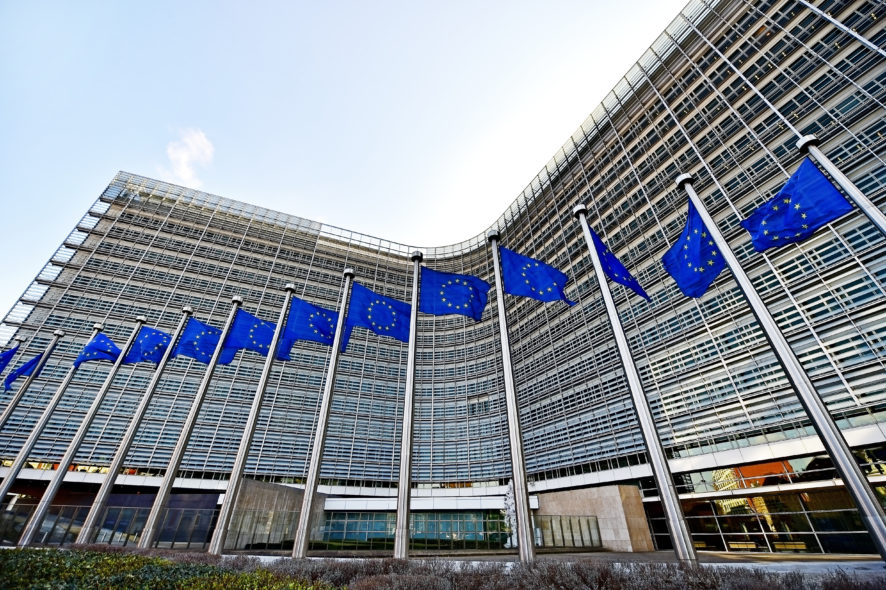
Europe's medical technology sector doesn't just deliver world-class solutions for patients and health systems. It drives the research that keeps Europe competitive, resilient and future-ready.

Digital Health
Digital Health
Medical technologies are transforming the way healthcare works for all of us. From faster diagnoses to remote monitoring, digital health contributes to smarter, safer, and more connected care.

International
International
MedTech Europe engages with global agencies, decision-makers and stakeholders on key international issues facing medical technology companies.

Sustainability and Environment
Sustainability and Environment
In addition to the medical technology sector’s core goal of saving lives and improving health, environmental and social considerations are an integral part of our industry’s operations. We acknowledge that preserving a healthy environment and building socially responsible value chains are essential in keeping human beings in good health. Our industry needs to be at the forefront of addressing challenges related to sustainable healthcare.

Market Data
Market Data
Taking decisions based on individual knowledge and market understanding has proven to be insufficient in the digital era. Successful medical technology companies have leveraged the power of technology and big data to take rigorous decisions based on empirical data. Staying up to date with the latest trends requires a trusted data provider and market intelligence service.

Research and Innovation
Research and Innovation
Research & Innovation (R&I) is the lifeblood of Europe’s medical technology sector. Industry investment in R&I delivers life-enhancing devices, diagnostics, and digital solutions. The European Union’s support for R&I offers valuable opportunities for academia and industry to generate new knowledge and use it to tackle the biggest challenges facing our societies. The quest for tomorrow’s healthcare innovations demands new, broad partnerships. R&I is most impactful when it is based on collaboration. MedTech Europe is committed to working with others in the public and private sectors to find solutions to our challenges.

Innovative Health Initiative (IHI)
Innovative Health Initiative (IHI)
The Innovative Health Initiative (IHI) is a public-private partnership between the European Union and the European life science industries, under the EU R&I funding programme Horizon Europe. IHI was launched in 2021 and will run until 2027.

Sector Groups
Cancer
Cancer
Medical technologies play an essential role throughout the whole cancer continuum: they help prevent and detect cancer at early stages, treat patients and prevent treatment complications, as well as improve the quality of life of cancer patients and survivors.

Diabetes
Diabetes
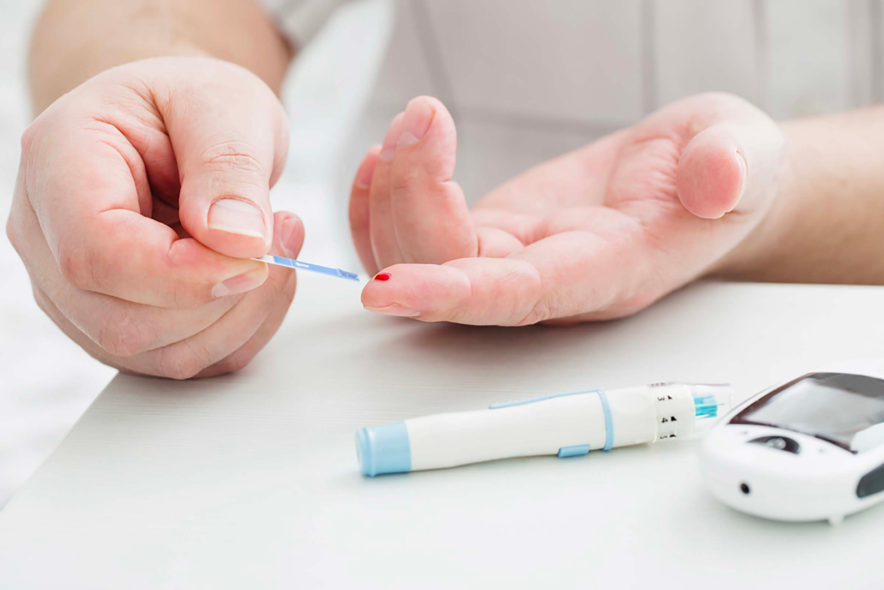
Diabetes is a silent pandemic. There are 60 million people across Europe living with the condition—equivalent to the population of Italy – and the numbers are rising each year. If current trends continue, diabetes will soon be the number one health threat in Europe.
The MedTech Europe Diabetes Group aims to reverse this trend by taking meaningful collective action on prevention, diagnosis and treatment for the millions of people living with diabetes, so that they can get back to leading full and fear-free lives.
Antimicrobial Resistance (AMR) and Healthcare Associated Infections (HAIS)
Antimicrobial Resistance (AMR) and Healthcare Associated Infections (HAIS)
Antimicrobial Resistance (AMR) and Healthcare Associated Infections (HAI) are among the biggest global public health challenges of our time. These infections cause significant morbidity and mortality, put pressure on health systems, and incur rising direct and indirect costs.
Medical technologies can help to address these problems by preventing, detecting, monitoring and managing infections and resistance.

Cardiovascular
Cardiovascular
Cardiovascular diseases, including heart failure, atrial fibrillation-related stroke, heart valve disease or coronary heart disease, can impact people of all ages and remain the leading cause of death in the European Union.
The medical technology industry provides high-quality solutions to safeguard and promote cardiovascular health and reduce the burden of cardiovascular diseases on individuals, families, and the wider society.

Orthopaedic
Orthopaedic
Orthopaedics is the medical specialty that focuses on injuries and diseases of the human body's musculoskeletal system. This complex system includes bones; joints; ligaments; tendons; muscles; and nerves; and allows you to move, work, and stay active.
The medical technology industry develops products that reduce the burden of musculoskeletal diseases on individuals, families, and the wider economy. These innovations improve quality of life and add enormous value to the European society.

Robotic-Assisted Surgery
Robotic-Assisted Surgery
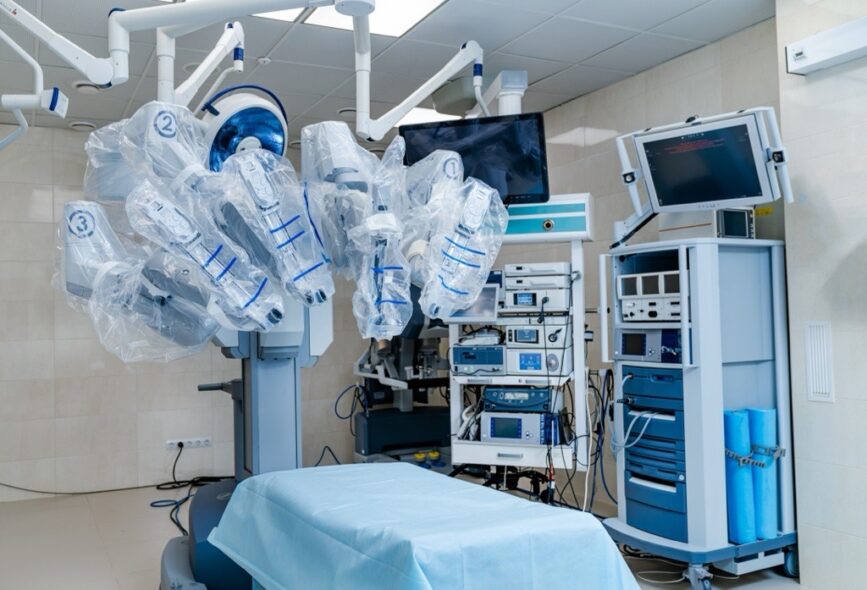
Robotic-Assisted Surgery (RAS) represents a major innovation in modern medicine, combining advanced robotic systems and computer technologies with human expertise to enhance surgical precision. It is today a cornerstone of modern surgical practice and transforming patient care.
Wound Care
Wound Care
Wound care is the medical speciality focusing on preventing wounds from developing, identifying them early, and ensuring they heal effectively.
Medical technologies play a crucial role in transforming wound care, enabling earlier detection, more precise assessment, and advanced treatments that accelerate healing, prevent complications, and reduce the burden on patients and health systems.

A place for dialogue about medical technologies
Explore




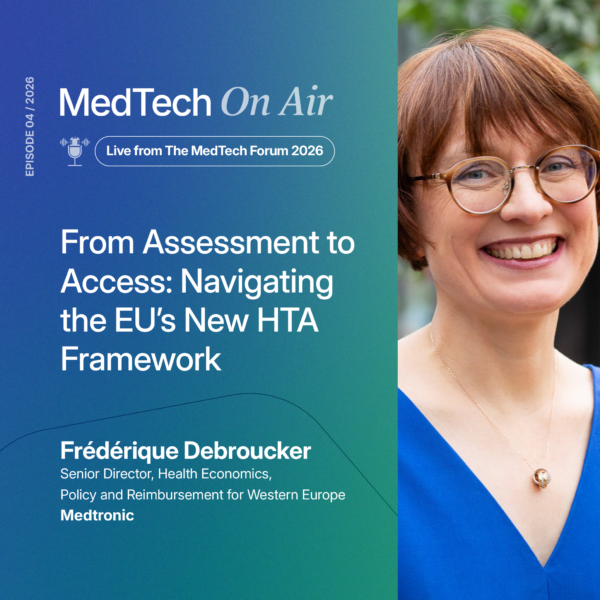
Posted on 13.10.2026
From assessment to access: navigating the EU’s new HTA framework
In early October 2026, the European Commission adopted its first decision to select two medical devices for joint clinical assessment under the EU Health Technology Assessment (HTA). What does this mean for medtech innovators? Tune into the latest episode of MedTech ON AIR, recorded live from our booth at The MedTech Forum 2026, where Frédérique […]